Turn your mortgage into a wealth-building tool. Smith Manoeuvre strategies, tax-smart planning, and honest math from two Canadian mortgage strategists.
Your Home Inspection May Skip the Furnace: Ask for This Check Before Closing
On a fall or winter showing in Grimsby, your attention goes where the listing photos pointed it: the quartz counters, the refinished hardwood, the gas fireplace in the family room. The furnace gets a glance on the way past the laundry room, if the basement makes the tour at all. That box in the corner can carry a replacement bill in the thousands, and a warm house gives you no clue whether that bill is ten years out or due next January.
If you've ever left a warm winter showing reassured that the heating works, then wondered whether your inspection will catch an expensive problem, this checklist is for you. By the end you'll know which furnace check to request before you commit, so you can budget for what it finds while your offer still gives you room to act. A standard home inspection generally includes a visual look at the heating system and a basic test that it runs. A full technical evaluation is a separate job, and surprise costs hide in the gap between the two.
Three furnace checks that reveal what you're buying before you commit
Ask what your home inspection actually covers. Before you book, ask the inspector whether they'll run the heat, which panels they'll open and what their report excludes. People skip this because "furnace operational" on a summary sounds like enough. The warm showing proved the furnace ran that afternoon. It said nothing about the parts you couldn't see.
Request the furnace's age and service records. The rating plate inside the cabinet usually shows the manufacture date, and the seller may have maintenance invoices. Treat roughly 15-20 years as a planning range for a gas furnace. A unit can outlast it or fail well before it. A younger furnace that was never serviced can be in rougher shape than an older one tuned every fall, so the records matter as much as the date. Buyers often skip asking because it feels fussy. Sellers ask for far more paperwork than this.
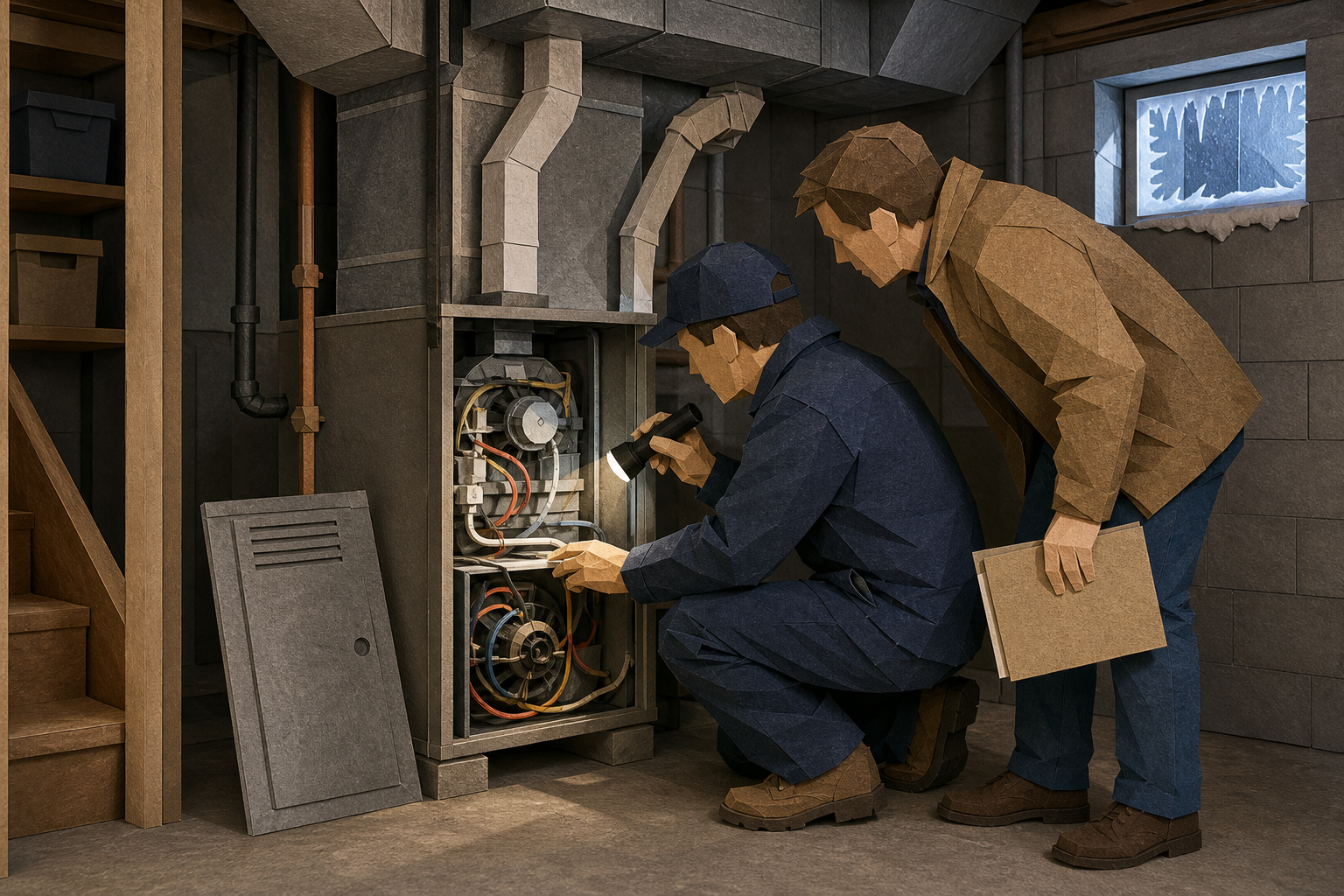
Book a dedicated furnace assessment. Hire a TSSA-registered fuels contractor and confirm an appropriately certified gas technician will do the work. HVAC, short for heating, ventilation and air conditioning, contractors can check combustion (whether the fuel burns cleanly) and venting (whether exhaust, including carbon monoxide, leaves the house the way it should). Ask what assessment of the heat exchanger is included. That's the metal wall between the flame and the air you breathe. Budget roughly $100-$250 as a starting guess, then let a written local quote and the stated test scope decide. Insist on a written report.
Two steps that turn furnace findings into a protected closing budget
Get written estimates for anything the report flags. Sort each finding into one of three buckets: an immediate safety issue, a repair, or a possible replacement. If the technician finds an immediate gas-safety hazard, they're required to make the appliance safe, which can mean shutting off its gas supply on the spot. This is the realization worth carrying into every showing: a furnace that heats the house today has proven only that it heats the house today. Safety, reliability and running cost are separate questions, and written estimates let you plan around evidence instead of a number someone guessed.
Settle the findings while your offer terms still give you options. What you can ask for depends on your conditions, your deadlines and whether the seller agrees. Finding a defect doesn't automatically entitle you to a lower price or a credit. Talk through any request with your real estate representative and your lawyer. Before you agree to a price adjustment or a credit on closing, check with your mortgage agent, because each one can change how your financing and down payment work out.
A warm showing tells you the furnace runs. These checks tell you what you're agreeing to buy. Once you have the estimated furnace costs, send them to me before you finalize your financing plan, and we'll review your closing budget and the repair cash you'll want on hand. The technical and legal calls stay with your technician and your lawyer.



On a fall or winter showing in Grimsby, your attention goes where the listing photos pointed it: the quartz counters, the refinished hardwood, the gas fireplace in the family room. The furnace gets a glance on the way past the laundry room, if the basement makes the tour at all. That box in the corner can carry a replacement bill in the thousands, and a warm house gives you no clue whether that bill is ten years out or due next January.
If you've ever left a warm winter showing reassured that the heating works, then wondered whether your inspection will catch an expensive problem, this checklist is for you. By the end you'll know which furnace check to request before you commit, so you can budget for what it finds while your offer still gives you room to act. A standard home inspection generally includes a visual look at the heating system and a basic test that it runs. A full technical evaluation is a separate job, and surprise costs hide in the gap between the two.
Three furnace checks that reveal what you're buying before you commit
Ask what your home inspection actually covers. Before you book, ask the inspector whether they'll run the heat, which panels they'll open and what their report excludes. People skip this because "furnace operational" on a summary sounds like enough. The warm showing proved the furnace ran that afternoon. It said nothing about the parts you couldn't see.
Request the furnace's age and service records. The rating plate inside the cabinet usually shows the manufacture date, and the seller may have maintenance invoices. Treat roughly 15-20 years as a planning range for a gas furnace. A unit can outlast it or fail well before it. A younger furnace that was never serviced can be in rougher shape than an older one tuned every fall, so the records matter as much as the date. Buyers often skip asking because it feels fussy. Sellers ask for far more paperwork than this.
Book a dedicated furnace assessment. Hire a TSSA-registered fuels contractor and confirm an appropriately certified gas technician will do the work. HVAC, short for heating, ventilation and air conditioning, contractors can check combustion (whether the fuel burns cleanly) and venting (whether exhaust, including carbon monoxide, leaves the house the way it should). Ask what assessment of the heat exchanger is included. That's the metal wall between the flame and the air you breathe. Budget roughly $100-$250 as a starting guess, then let a written local quote and the stated test scope decide. Insist on a written report.
Two steps that turn furnace findings into a protected closing budget
Get written estimates for anything the report flags. Sort each finding into one of three buckets: an immediate safety issue, a repair, or a possible replacement. If the technician finds an immediate gas-safety hazard, they're required to make the appliance safe, which can mean shutting off its gas supply on the spot. This is the realization worth carrying into every showing: a furnace that heats the house today has proven only that it heats the house today. Safety, reliability and running cost are separate questions, and written estimates let you plan around evidence instead of a number someone guessed.
Settle the findings while your offer terms still give you options. What you can ask for depends on your conditions, your deadlines and whether the seller agrees. Finding a defect doesn't automatically entitle you to a lower price or a credit. Talk through any request with your real estate representative and your lawyer. Before you agree to a price adjustment or a credit on closing, check with your mortgage agent, because each one can change how your financing and down payment work out.
A warm showing tells you the furnace runs. These checks tell you what you're agreeing to buy. Once you have the estimated furnace costs, send them to me before you finalize your financing plan, and we'll review your closing budget and the repair cash you'll want on hand. The technical and legal calls stay with your technician and your lawyer.
Read Next
The Winter Market Isn't an Off-Season Compromise. It's an Audit.
Before Your Bonus Hits: The 5-Point Mortgage Prepayment Audit
The Early Mortgage Renewal Offer You Should Never Sign on Day One
Before You Sign Your Mortgage: The 4 Things to Negotiate Before You Invest