Turn your mortgage into a wealth-building tool. Smith Manoeuvre strategies, tax-smart planning, and honest math from two Canadian mortgage strategists.
Why Owning the Whole S&P 500 Now Means Owning Nothing Special
In Q2 2026, business investment in machinery and equipment hit its highest level since mid-2024, with spending on computers and peripherals up 16.7%. That figure, from Statistics Canada, tells you where the money is actually moving. It isn't going equally everywhere. It's clustering in the sectors that power AI: data centers, electrical grids, cooling systems, advanced materials. If you own the whole S&P 500 or the S&P/TSX Composite, you own those winners. You also own everything else, in proportion to market cap, which means you're holding the average at exactly the moment the average stops being useful.
The concentration you didn't ask for
Broad market indices are market-cap weighted. The top 10 stocks in the S&P 500 represented over 30% of the index's total value at various points in 2024 and 2025, a multi-decade high. The so-called Magnificent Seven drove the vast majority of early 2024 gains. By late 2024, breadth expanded: around 54% of the S&P 500 outperformed the index itself during the rally, up sharply from the narrow tech-only phase.
That sounds like diversification working. It isn't. What happened is AI spending moved downstream. Hyperscalers, Meta, Alphabet, Microsoft, Amazon, committed over $200 billion in combined annual AI-related capital expenditures in 2025. That money flows into utilities providing baseload power, industrial firms supplying copper wiring, materials companies producing rare earth elements, energy providers building out grid capacity. The theme didn't broaden. The spending did.
When you own the index, you own the utilities benefiting from data center demand and the retailers being disrupted by the same automation those data centers enable. You own the copper producer and the legacy telecom it's replacing. Diversification, in this environment, is dilution. You're forced to hold the laggards alongside the accelerators, and the math weights everything by size, not by exposure to the actual earnings driver.
Where the institutional money is rotating
Professional allocators don't wait for a theme to show up in every sector's earnings reports. They rotate once the spending commitments are public and the data centers, power plants, and supply contracts are confirmed. AI moved from the hype cycle to the capex cycle in 2024. By mid-2025, the smart money was already overweight energy, utilities, and materials relative to the broad index. Not because those sectors are "hot," but because AI can't scale without the power lines, cooling towers, and materials they provide, and the contracts are already signed.
A mid-cap Canadian electrical utility serving data center corridors trades at a lower multiple than a mega-cap software firm, but its revenue growth is tied directly to the demand from AI data centers that won't slow for years. The index gives you some of that. It also gives you equal exposure to every company in that utility's sector that isn't near a data center. The opportunity cost is real.
The tax problem for high earners
For high-income Canadian investors, the mechanics of shifting from broad diversification to thematic concentration changed in 2024. Capital gains remain taxed at a 50% inclusion rate for all taxpayers. If you bought a broad ETF years ago and it's sitting on a large embedded gain, selling to rebalance into concentrated positions can trigger a tax hit that exceeds the projected alpha.
Tax-loss harvesting becomes the primary lever. Use new cash flow to build satellite positions around your core holding. Rebalance using contributions, not liquidations. Structure the shift so the tax tail doesn't wag the portfolio dog. The threshold is $250,000 per year. Plan the transition across multiple tax years if the gain is large enough.
The counterpoint nobody wants to hear
Concentration increases volatility. If the data center spending slows, or if one of the sectors you're overweight faces regulatory headwinds or commodity price shocks, a concentrated portfolio will lose more than the index. The diversified index protects you from picking the wrong winner within the theme. It also guarantees you hold the losers.
The bet isn't that concentration always wins. The bet is that at this specific point in the cycle, when a massive capital expenditure wave is moving from primary tech into power plants, transmission lines, and materials supply, the returns are differentiated enough to justify the risk for investors who can afford it and who have the liquidity to rebalance without breaking the portfolio's tax efficiency. Most people running this math know that. They're just deciding whether to act on it before the window closes.


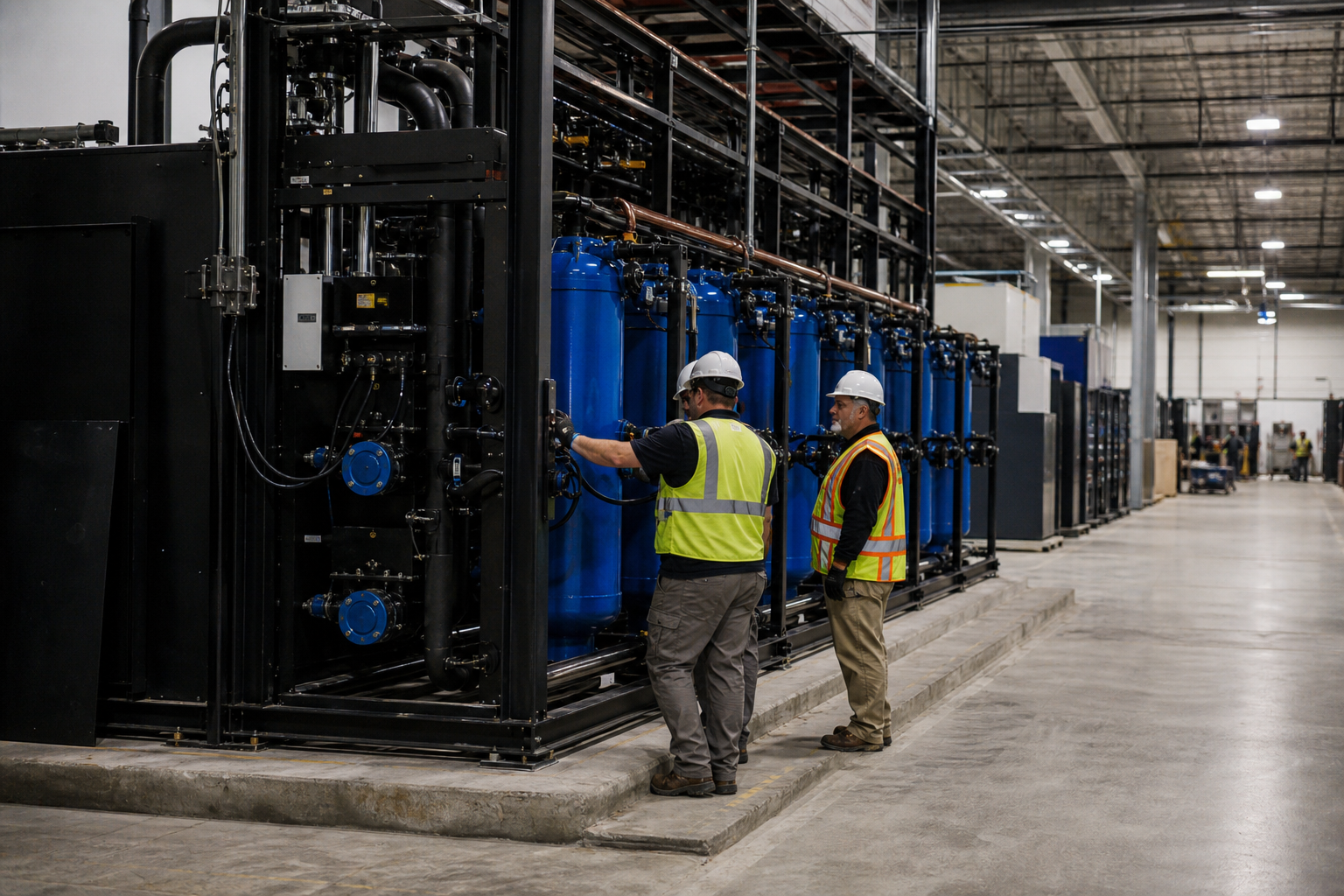

In Q2 2026, business investment in machinery and equipment hit its highest level since mid-2024, with spending on computers and peripherals up 16.7%. That figure, from Statistics Canada, tells you where the money is actually moving. It isn't going equally everywhere. It's clustering in the sectors that power AI: data centers, electrical grids, cooling systems, advanced materials. If you own the whole S&P 500 or the S&P/TSX Composite, you own those winners. You also own everything else, in proportion to market cap, which means you're holding the average at exactly the moment the average stops being useful.
The concentration you didn't ask for
Broad market indices are market-cap weighted. The top 10 stocks in the S&P 500 represented over 30% of the index's total value at various points in 2024 and 2025, a multi-decade high. The so-called Magnificent Seven drove the vast majority of early 2024 gains. By late 2024, breadth expanded: around 54% of the S&P 500 outperformed the index itself during the rally, up sharply from the narrow tech-only phase.
That sounds like diversification working. It isn't. What happened is AI spending moved downstream. Hyperscalers, Meta, Alphabet, Microsoft, Amazon, committed over $200 billion in combined annual AI-related capital expenditures in 2025. That money flows into utilities providing baseload power, industrial firms supplying copper wiring, materials companies producing rare earth elements, energy providers building out grid capacity. The theme didn't broaden. The spending did.
When you own the index, you own the utilities benefiting from data center demand and the retailers being disrupted by the same automation those data centers enable. You own the copper producer and the legacy telecom it's replacing. Diversification, in this environment, is dilution. You're forced to hold the laggards alongside the accelerators, and the math weights everything by size, not by exposure to the actual earnings driver.
Where the institutional money is rotating
Professional allocators don't wait for a theme to show up in every sector's earnings reports. They rotate once the spending commitments are public and the data centers, power plants, and supply contracts are confirmed. AI moved from the hype cycle to the capex cycle in 2024. By mid-2025, the smart money was already overweight energy, utilities, and materials relative to the broad index. Not because those sectors are "hot," but because AI can't scale without the power lines, cooling towers, and materials they provide, and the contracts are already signed.
A mid-cap Canadian electrical utility serving data center corridors trades at a lower multiple than a mega-cap software firm, but its revenue growth is tied directly to the demand from AI data centers that won't slow for years. The index gives you some of that. It also gives you equal exposure to every company in that utility's sector that isn't near a data center. The opportunity cost is real.
The tax problem for high earners
For high-income Canadian investors, the mechanics of shifting from broad diversification to thematic concentration changed in 2024. Capital gains remain taxed at a 50% inclusion rate for all taxpayers. If you bought a broad ETF years ago and it's sitting on a large embedded gain, selling to rebalance into concentrated positions can trigger a tax hit that exceeds the projected alpha.
Tax-loss harvesting becomes the primary lever. Use new cash flow to build satellite positions around your core holding. Rebalance using contributions, not liquidations. Structure the shift so the tax tail doesn't wag the portfolio dog. The threshold is $250,000 per year. Plan the transition across multiple tax years if the gain is large enough.
The counterpoint nobody wants to hear
Concentration increases volatility. If the data center spending slows, or if one of the sectors you're overweight faces regulatory headwinds or commodity price shocks, a concentrated portfolio will lose more than the index. The diversified index protects you from picking the wrong winner within the theme. It also guarantees you hold the losers.
The bet isn't that concentration always wins. The bet is that at this specific point in the cycle, when a massive capital expenditure wave is moving from primary tech into power plants, transmission lines, and materials supply, the returns are differentiated enough to justify the risk for investors who can afford it and who have the liquidity to rebalance without breaking the portfolio's tax efficiency. Most people running this math know that. They're just deciding whether to act on it before the window closes.
Sources
Read Next
Wells Fargo Says Rising Bond Yields Should Force You to Rethink Your Stock Portfolio
At the Top Tax Bracket, Every Dollar of Rental Interest Returns 53 Cents: Why the Smith Manoeuvre™ Is a High-Income Play
China's Treasury retreat to record lows rewrites the rules for bond investors
GIC Rates Below 4.2% Flip the Smith Manoeuvre™ Math From Marginal to Compelling