Turn your mortgage into a wealth-building tool. Smith Manoeuvre strategies, tax-smart planning, and honest math from two Canadian mortgage strategists.
Unifor Locks GM Deal That Will Reshape Wage Floor Across Ontario Auto Plants
General Motors returned to the bargaining table in October 2023 with leverage most companies would envy: a backlog of truck orders, government subsidies exceeding $30 billion for Ontario's EV supply chain, and plants running near capacity. The strike that followed lasted approximately 13 hours.
That speed tells you which side held the cards. Unifor walked approximately 4,300 workers out of three facilities, Oshawa Assembly, St. Catharines Powertrain, and the Woodstock distribution hub, and had them back on the floor before a full shift cycle passed. The tentative agreement that ended it follows the pattern set earlier with Ford, which means the gains negotiated there now ripple across GM's Ontario footprint and will set the floor when Stellantis comes next.
Why the strike mattered
A short strike is not a weak one. Unifor used pattern bargaining, a strategy where the union picks one automaker as the template and extracts the best deal it can, then applies that framework to the rest. Ford went first and gave ground on wages, the elimination of the two-tier pay structure, and faster progression to top rates. GM had two choices: match it or face a supply disruption during the highest-margin months of the year. They matched it.
The union made clear that any company benefiting from public money, NextStar's $15 billion battery plant, Volkswagen's assembly investment, the federal and provincial EV subsidies, would pay workers accordingly. The strike sent a message: companies funded with tax dollars cannot cut labor costs to the bone. GM's profit margins on the Silverado and Sierra models built in Oshawa made prolonged resistance expensive. Unifor knew it.
What the pattern delivers
The Ford template included base wage increases of roughly 15% over three years, the reinstatement of cost-of-living adjustments, and a reduction in the time required to reach top pay from eight years to four. The two-tier wage system, which created a permanent underclass of newer hires earning significantly less for identical work, is being phased out.
For a worker hired in 2022 at the lower tier, this means the difference between reaching $32 an hour in 2030 versus 2026. It is the ability to qualify for a mortgage, to plan around predictable income, to stop treating the job as temporary even when the automaker treats the worker as permanent.
Pension improvements are also part of the framework, though specifics remain confidential until the membership votes. The St. Catharines plant, which builds V8 engines and faces an uncertain future as GM shifts to electric drivetrains, secured job transition language. Exactly what that means, retraining, retooling, or severance, depends on ratification details the union has not yet disclosed.
The risk no one's talking about
High wages do not guarantee long-term headcount. An EV powertrain requires 40% fewer labor hours to assemble than an internal combustion engine. GM's $2 billion commitment to the CAMI plant in Ingersoll is for a BrightDrop electric van that will employ a fraction of the workers a traditional assembly line would. The Oshawa plant, once slated for permanent closure in 2019, reopened in 2021 because truck demand spiked. That demand is cyclical.
Unifor won this round because GM needed stability and the government provided billions in subsidies that made walking away expensive. But automakers do math. If Ontario labor costs rise faster than productivity, the next wave of investment goes to Mexico or the non-union South. The union bet that locking in gains now, while leverage exists, is worth the long-term risk. The membership will vote on whether they agree.


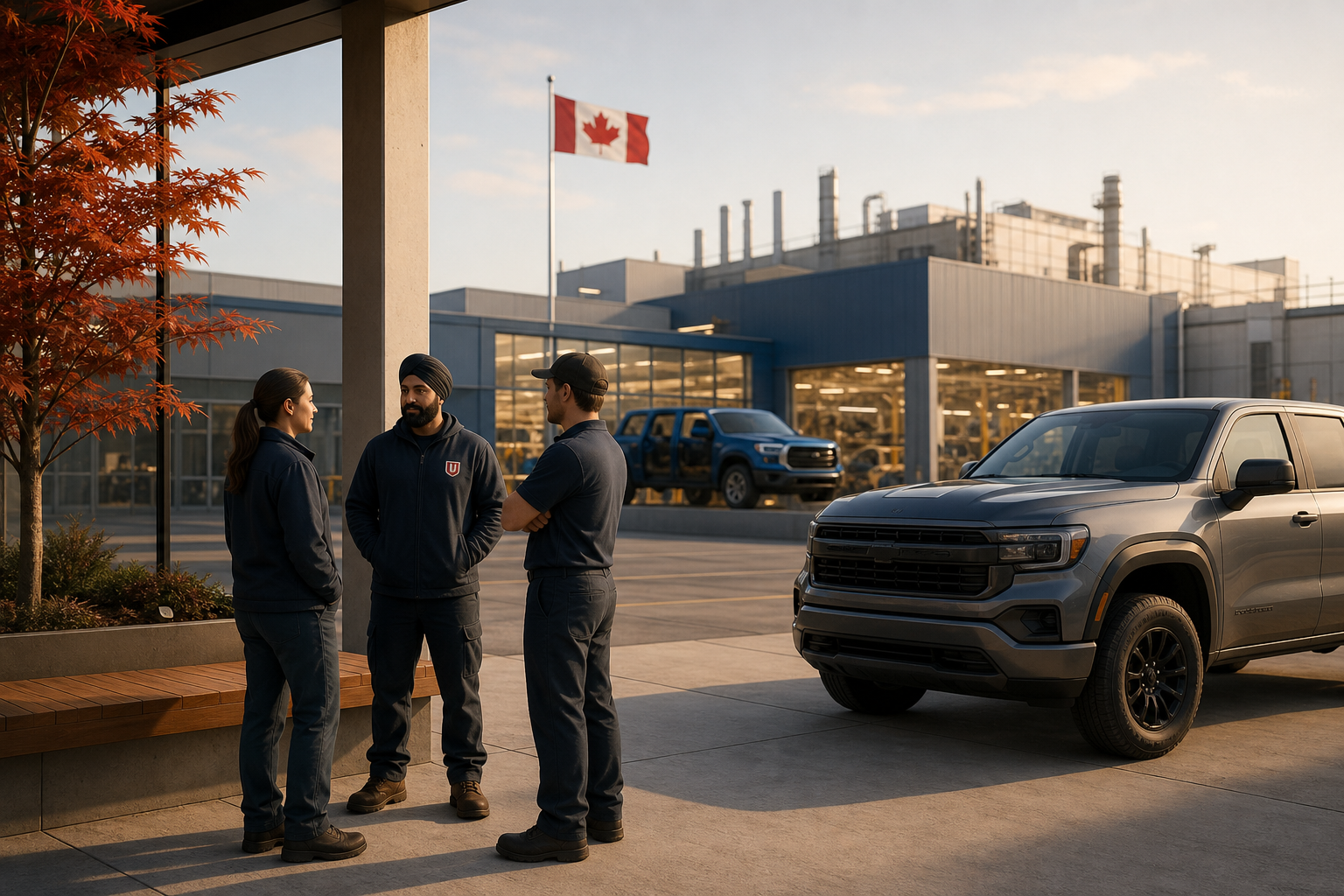

General Motors returned to the bargaining table in October 2023 with leverage most companies would envy: a backlog of truck orders, government subsidies exceeding $30 billion for Ontario's EV supply chain, and plants running near capacity. The strike that followed lasted approximately 13 hours.
That speed tells you which side held the cards. Unifor walked approximately 4,300 workers out of three facilities, Oshawa Assembly, St. Catharines Powertrain, and the Woodstock distribution hub, and had them back on the floor before a full shift cycle passed. The tentative agreement that ended it follows the pattern set earlier with Ford, which means the gains negotiated there now ripple across GM's Ontario footprint and will set the floor when Stellantis comes next.
Why the strike mattered
A short strike is not a weak one. Unifor used pattern bargaining, a strategy where the union picks one automaker as the template and extracts the best deal it can, then applies that framework to the rest. Ford went first and gave ground on wages, the elimination of the two-tier pay structure, and faster progression to top rates. GM had two choices: match it or face a supply disruption during the highest-margin months of the year. They matched it.
The union made clear that any company benefiting from public money, NextStar's $15 billion battery plant, Volkswagen's assembly investment, the federal and provincial EV subsidies, would pay workers accordingly. The strike sent a message: companies funded with tax dollars cannot cut labor costs to the bone. GM's profit margins on the Silverado and Sierra models built in Oshawa made prolonged resistance expensive. Unifor knew it.
What the pattern delivers
The Ford template included base wage increases of roughly 15% over three years, the reinstatement of cost-of-living adjustments, and a reduction in the time required to reach top pay from eight years to four. The two-tier wage system, which created a permanent underclass of newer hires earning significantly less for identical work, is being phased out.
For a worker hired in 2022 at the lower tier, this means the difference between reaching $32 an hour in 2030 versus 2026. It is the ability to qualify for a mortgage, to plan around predictable income, to stop treating the job as temporary even when the automaker treats the worker as permanent.
Pension improvements are also part of the framework, though specifics remain confidential until the membership votes. The St. Catharines plant, which builds V8 engines and faces an uncertain future as GM shifts to electric drivetrains, secured job transition language. Exactly what that means, retraining, retooling, or severance, depends on ratification details the union has not yet disclosed.
The risk no one's talking about
High wages do not guarantee long-term headcount. An EV powertrain requires 40% fewer labor hours to assemble than an internal combustion engine. GM's $2 billion commitment to the CAMI plant in Ingersoll is for a BrightDrop electric van that will employ a fraction of the workers a traditional assembly line would. The Oshawa plant, once slated for permanent closure in 2019, reopened in 2021 because truck demand spiked. That demand is cyclical.
Unifor won this round because GM needed stability and the government provided billions in subsidies that made walking away expensive. But automakers do math. If Ontario labor costs rise faster than productivity, the next wave of investment goes to Mexico or the non-union South. The union bet that locking in gains now, while leverage exists, is worth the long-term risk. The membership will vote on whether they agree.
Sources
Read Next
Wells Fargo Says Rising Bond Yields Should Force You to Rethink Your Stock Portfolio
At the Top Tax Bracket, Every Dollar of Rental Interest Returns 53 Cents: Why the Smith Manoeuvre™ Is a High-Income Play
China's Treasury retreat to record lows rewrites the rules for bond investors
GIC Rates Below 4.2% Flip the Smith Manoeuvre™ Math From Marginal to Compelling