Turn your mortgage into a wealth-building tool. Smith Manoeuvre strategies, tax-smart planning, and honest math from two Canadian mortgage strategists.
Trump's Tariff Pressure Just Handed Carney a Political Win
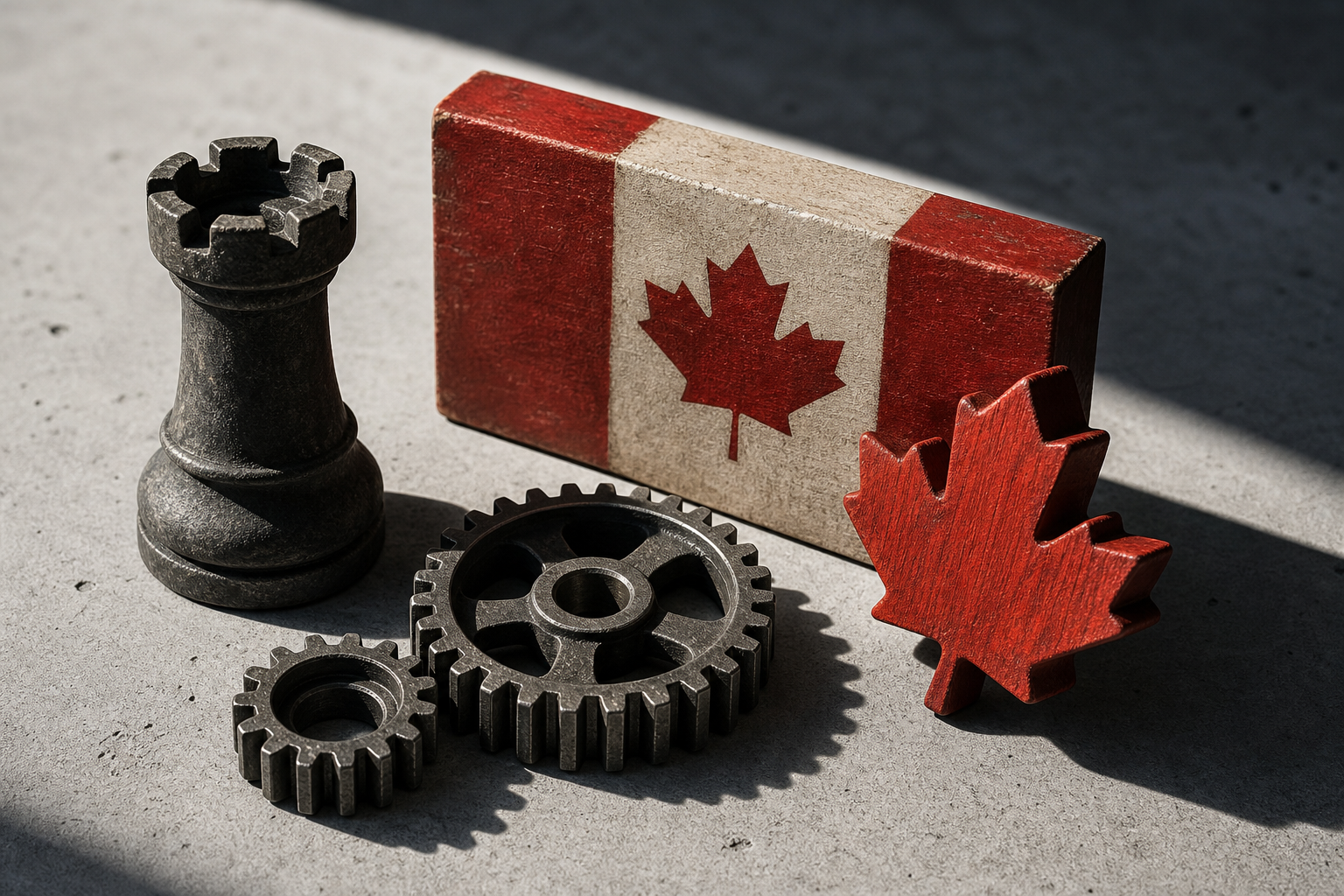
Canada imposed C$27.6 billion in retaliatory tariffs on American goods this week, targeting everything from bourbon to frozen orange juice to industrial machinery. The move came after the White House slapped a 50% tariff on Canadian exports, the latest escalation in a trade war that was supposed to fracture Canadian resolve. Instead, it's done the opposite.
Mark Carney's approval rating has climbed 7 points since the tariff fight began. Public sentiment, which typically fractures when economic pain arrives, has instead hardened behind the federal response. According to Nanos Research polling conducted for CTV News in September 2026, 75% of Canadians support retaliatory tariffs, with another 10% somewhat supporting them. That number was 52% in March, before Trump's first salvo. The dynamic is textbook rally-around-the-flag, and it's landed in Carney's lap at the exact moment his government needed it.
Why External Pressure Backfired
Trade wars are supposed to work by creating domestic pain that forces the target government to fold. The U.S. tariff hits hardest on softwood lumber, steel, and auto parts, sectors where Canada has limited leverage to retaliate symmetrically. The Bank of Canada flagged the tariffs as the primary risk to the 2026 inflation target of 2%, warning that import costs could spike and suppress growth simultaneously.
But the political logic broke. Canadians aren't blaming Carney for the disruption. They're blaming Washington. The distinction matters because it flips the usual script: instead of the opposition using economic friction to hammer the sitting government, the friction itself becomes proof the government is standing firm. Carney didn't create this dynamic, Trump did. But Carney is the one collecting the upside.
The retaliation strategy is careful. Canada's tariff list includes prepared foods, appliances, and agricultural products from states that matter electorally in the U.S., Michigan bourbon, Florida citrus, Wisconsin dairy equipment. The goal is to create enough constituent pressure in the U.S. to make the tariff policy unsustainable for Trump without inflicting maximum pain on Canadian consumers. It's the same playbook Canada used in 2018, when steel and aluminum tariffs were met with dollar-for-dollar retaliation on U.S. whiskey, ketchup, and lawn mowers. That round ended with the U.S. backing down.
The Cost Side Still Exists
None of this makes the tariffs free. Canada and the U.S. trade C$3.6 billion in goods daily. Decades of integration under NAFTA and its successor, the Canada-United States-Mexico Agreement, mean a "U.S. good" often contains Canadian components. A tariff on American steel hurts Canadian manufacturers who need that steel to finish products for export. The circular damage is real.
And while Carney's team has chosen retaliation targets strategically, tariffs are still a tax on Canadian households. Substitutes exist for some goods, European appliances, Mexican produce, but not for all. The Bank of Canada's inflation warning isn't hypothetical. If import costs rise faster than wage growth, the political benefit Carney is enjoying now could reverse by mid-2027.
The other risk is escalation. The U.S. administration has shown no interest in de-escalation mechanisms. If Trump responds to Canada's C$27.6 billion with another round, the cycle continues until someone blinks or both economies are materially worse off. The USMCA joint review clause comes up in 2026, and this fight is now the backdrop for that negotiation.
What Carney Actually Gained
The immediate win is legitimacy. Carney entered office as a technocrat, former central banker, data-driven, not a natural culture-war combatant. The tariff fight let him demonstrate resolve without needing to manufacture it. He didn't pick this fight, but he's used it to define his government as competent under pressure. That's worth more than 7 polling points. It's a narrative advantage heading into the next electoral cycle.
The harder question is whether that advantage survives contact with the grocery bill. Rally effects fade. Inflation doesn't.



Canada imposed C$27.6 billion in retaliatory tariffs on American goods this week, targeting everything from bourbon to frozen orange juice to industrial machinery. The move came after the White House slapped a 50% tariff on Canadian exports, the latest escalation in a trade war that was supposed to fracture Canadian resolve. Instead, it's done the opposite.
Mark Carney's approval rating has climbed 7 points since the tariff fight began. Public sentiment, which typically fractures when economic pain arrives, has instead hardened behind the federal response. According to Nanos Research polling conducted for CTV News in September 2026, 75% of Canadians support retaliatory tariffs, with another 10% somewhat supporting them. That number was 52% in March, before Trump's first salvo. The dynamic is textbook rally-around-the-flag, and it's landed in Carney's lap at the exact moment his government needed it.
Why External Pressure Backfired
Trade wars are supposed to work by creating domestic pain that forces the target government to fold. The U.S. tariff hits hardest on softwood lumber, steel, and auto parts, sectors where Canada has limited leverage to retaliate symmetrically. The Bank of Canada flagged the tariffs as the primary risk to the 2026 inflation target of 2%, warning that import costs could spike and suppress growth simultaneously.
But the political logic broke. Canadians aren't blaming Carney for the disruption. They're blaming Washington. The distinction matters because it flips the usual script: instead of the opposition using economic friction to hammer the sitting government, the friction itself becomes proof the government is standing firm. Carney didn't create this dynamic, Trump did. But Carney is the one collecting the upside.
The retaliation strategy is careful. Canada's tariff list includes prepared foods, appliances, and agricultural products from states that matter electorally in the U.S., Michigan bourbon, Florida citrus, Wisconsin dairy equipment. The goal is to create enough constituent pressure in the U.S. to make the tariff policy unsustainable for Trump without inflicting maximum pain on Canadian consumers. It's the same playbook Canada used in 2018, when steel and aluminum tariffs were met with dollar-for-dollar retaliation on U.S. whiskey, ketchup, and lawn mowers. That round ended with the U.S. backing down.
The Cost Side Still Exists
None of this makes the tariffs free. Canada and the U.S. trade C$3.6 billion in goods daily. Decades of integration under NAFTA and its successor, the Canada-United States-Mexico Agreement, mean a "U.S. good" often contains Canadian components. A tariff on American steel hurts Canadian manufacturers who need that steel to finish products for export. The circular damage is real.
And while Carney's team has chosen retaliation targets strategically, tariffs are still a tax on Canadian households. Substitutes exist for some goods, European appliances, Mexican produce, but not for all. The Bank of Canada's inflation warning isn't hypothetical. If import costs rise faster than wage growth, the political benefit Carney is enjoying now could reverse by mid-2027.
The other risk is escalation. The U.S. administration has shown no interest in de-escalation mechanisms. If Trump responds to Canada's C$27.6 billion with another round, the cycle continues until someone blinks or both economies are materially worse off. The USMCA joint review clause comes up in 2026, and this fight is now the backdrop for that negotiation.
What Carney Actually Gained
The immediate win is legitimacy. Carney entered office as a technocrat, former central banker, data-driven, not a natural culture-war combatant. The tariff fight let him demonstrate resolve without needing to manufacture it. He didn't pick this fight, but he's used it to define his government as competent under pressure. That's worth more than 7 polling points. It's a narrative advantage heading into the next electoral cycle.
The harder question is whether that advantage survives contact with the grocery bill. Rally effects fade. Inflation doesn't.
Sources
Read Next
Wells Fargo Says Rising Bond Yields Should Force You to Rethink Your Stock Portfolio
At the Top Tax Bracket, Every Dollar of Rental Interest Returns 53 Cents: Why the Smith Manoeuvre™ Is a High-Income Play
China's Treasury retreat to record lows rewrites the rules for bond investors
GIC Rates Below 4.2% Flip the Smith Manoeuvre™ Math From Marginal to Compelling