Turn your mortgage into a wealth-building tool. Smith Manoeuvre strategies, tax-smart planning, and honest math from two Canadian mortgage strategists.
Toronto Started 156 Condos in Six Months. The Decade Average is 7,000 a Year.
A construction crane sitting idle tells you something went wrong months earlier. In Toronto, developers who normally launch five or six towers a year launched essentially none. CMHC's Fall 2026 Housing Supply Report shows 156 condominium units in the city across January through June. The historical decade average is roughly 7,000 units annually, which means the first half of 2026 ran at about 4% of the normal pace.
The freeze will not reverse on its own within a business cycle. Toronto condos move on pre-sales. Banks typically require developers to sell 70% to 80% of a building before issuing a construction loan. When buyer demand collapses, projects don't just slow down. They stop. The 156-unit figure reflects launches that had already cleared financing before rates rose or assignments that scraped past the threshold with heavy discounting. Everything else is sitting in a drawer.
The Three-Year Lag Nobody Wants to Talk About
A condo start in 2026 becomes move-in-ready inventory in 2029 or 2030. The construction timeline for a 40-storey tower in Toronto runs 36 to 42 months from groundbreaking to occupancy, depending on soil conditions and permit delays. That means the supply hitting the market in late 2029 was determined by what got financed in early 2026. And what got financed in early 2026 was almost nothing.
The gap creates an air pocket. Completions in 2026 and 2027 will still be relatively strong because those buildings started back in 2023 and 2024, when pre-sale absorption was healthier. The shortage shows up later. By 2030, the resale market will be competing for inventory that was never built, which tends to put upward pressure on prices for existing stock even when demand is tepid.
Nationally, CMHC pegs the annual housing shortfall at 187,000 to 238,000 homes over the next decade, the difference between the current construction pace and the 417,000 to 469,000 homes needed each year to restore 2019-level affordability by 2036. Toronto's 156 units in six months is the local manifestation of that larger arithmetic. The city that historically drove a meaningful share of national housing supply is now barely contributing.
The Hidden Opportunity in a Frozen Pipeline
For a buyer today, the stalled pipeline creates two opposing forces. On one hand, the lack of new supply in three years suggests that holding an existing condo or buying resale now may carry less competition from new builds when it comes time to sell. On the other, the freeze also means fewer opportunities to negotiate on assignments or purchase from builders who are sitting on unsold inventory from earlier launches.
The latter opportunity is narrow and time-sensitive. Developers who launched in late 2024 or early 2025 and didn't hit their pre-sale targets are holding completed or near-completed buildings they need to move. That inventory exists, but it's concentrated in specific buildings and price points, and it won't last. Once it clears, the next window for new supply doesn't open until projects that restart in late 2026 or 2027 finish construction.
The policy response, when it comes, will likely target development charges and HST harmonization on new builds. Both levers have been floated at Queen's Park and City Hall. Neither moves the 156-unit figure quickly, because the real constraint is the cost of borrowing and the collapse in pre-sale absorption. Until buyers return or rates fall further, the cranes stay idle.
If you're looking at Toronto real estate in 2026, the 156-unit figure matters most because of what it means for the market three years from now.


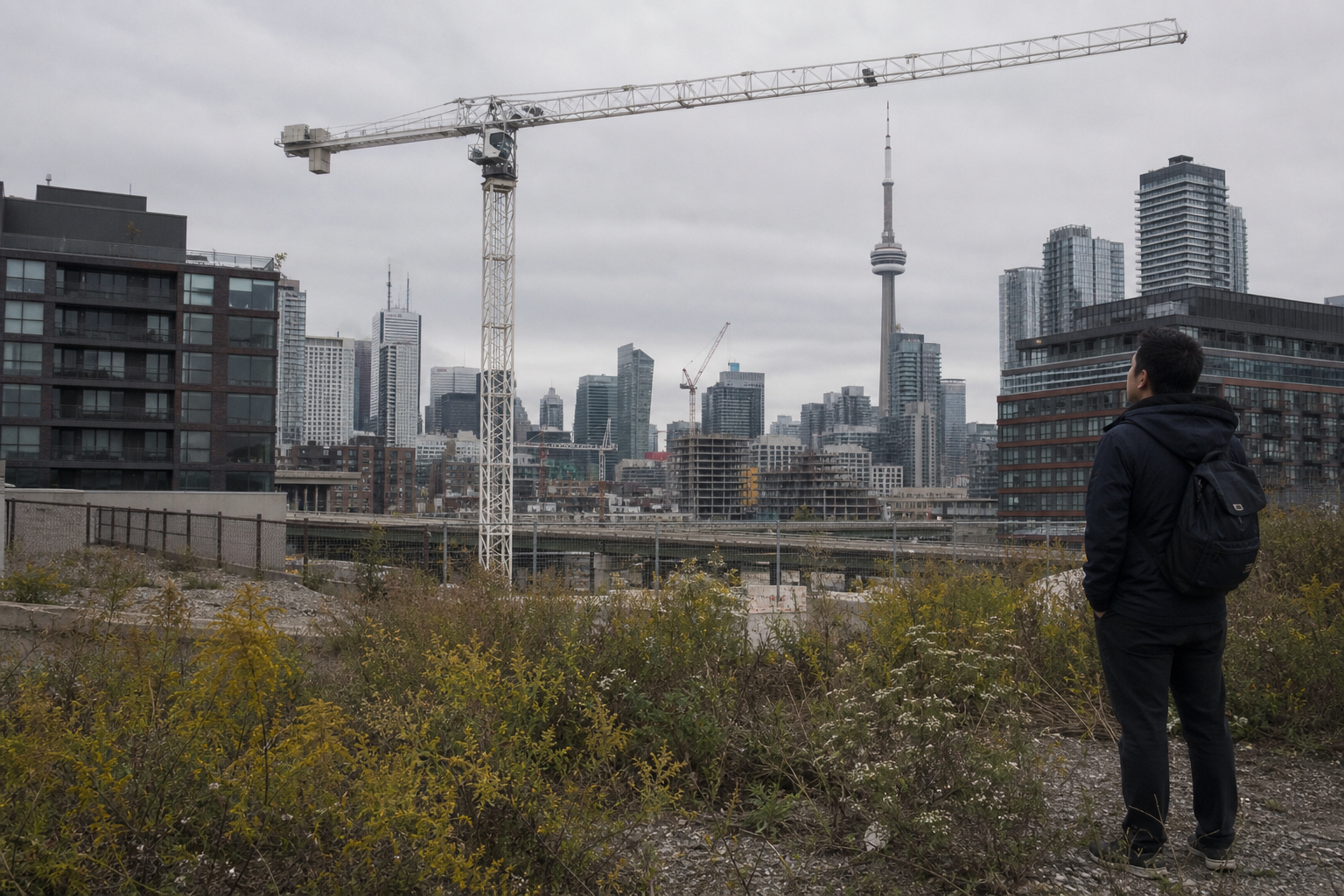

A construction crane sitting idle tells you something went wrong months earlier. In Toronto, developers who normally launch five or six towers a year launched essentially none. CMHC's Fall 2026 Housing Supply Report shows 156 condominium units in the city across January through June. The historical decade average is roughly 7,000 units annually, which means the first half of 2026 ran at about 4% of the normal pace.
The freeze will not reverse on its own within a business cycle. Toronto condos move on pre-sales. Banks typically require developers to sell 70% to 80% of a building before issuing a construction loan. When buyer demand collapses, projects don't just slow down. They stop. The 156-unit figure reflects launches that had already cleared financing before rates rose or assignments that scraped past the threshold with heavy discounting. Everything else is sitting in a drawer.
The Three-Year Lag Nobody Wants to Talk About
A condo start in 2026 becomes move-in-ready inventory in 2029 or 2030. The construction timeline for a 40-storey tower in Toronto runs 36 to 42 months from groundbreaking to occupancy, depending on soil conditions and permit delays. That means the supply hitting the market in late 2029 was determined by what got financed in early 2026. And what got financed in early 2026 was almost nothing.
The gap creates an air pocket. Completions in 2026 and 2027 will still be relatively strong because those buildings started back in 2023 and 2024, when pre-sale absorption was healthier. The shortage shows up later. By 2030, the resale market will be competing for inventory that was never built, which tends to put upward pressure on prices for existing stock even when demand is tepid.
Nationally, CMHC pegs the annual housing shortfall at 187,000 to 238,000 homes over the next decade, the difference between the current construction pace and the 417,000 to 469,000 homes needed each year to restore 2019-level affordability by 2036. Toronto's 156 units in six months is the local manifestation of that larger arithmetic. The city that historically drove a meaningful share of national housing supply is now barely contributing.
The Hidden Opportunity in a Frozen Pipeline
For a buyer today, the stalled pipeline creates two opposing forces. On one hand, the lack of new supply in three years suggests that holding an existing condo or buying resale now may carry less competition from new builds when it comes time to sell. On the other, the freeze also means fewer opportunities to negotiate on assignments or purchase from builders who are sitting on unsold inventory from earlier launches.
The latter opportunity is narrow and time-sensitive. Developers who launched in late 2024 or early 2025 and didn't hit their pre-sale targets are holding completed or near-completed buildings they need to move. That inventory exists, but it's concentrated in specific buildings and price points, and it won't last. Once it clears, the next window for new supply doesn't open until projects that restart in late 2026 or 2027 finish construction.
The policy response, when it comes, will likely target development charges and HST harmonization on new builds. Both levers have been floated at Queen's Park and City Hall. Neither moves the 156-unit figure quickly, because the real constraint is the cost of borrowing and the collapse in pre-sale absorption. Until buyers return or rates fall further, the cranes stay idle.
If you're looking at Toronto real estate in 2026, the 156-unit figure matters most because of what it means for the market three years from now.
Read Next
Wells Fargo Says Rising Bond Yields Should Force You to Rethink Your Stock Portfolio
At the Top Tax Bracket, Every Dollar of Rental Interest Returns 53 Cents: Why the Smith Manoeuvre™ Is a High-Income Play
China's Treasury retreat to record lows rewrites the rules for bond investors
GIC Rates Below 4.2% Flip the Smith Manoeuvre™ Math From Marginal to Compelling