Turn your mortgage into a wealth-building tool. Smith Manoeuvre strategies, tax-smart planning, and honest math from two Canadian mortgage strategists.
Ontario Has Three Moves Left in Trump's Trade War, and None of Them Are Good
The Ambassador Bridge carries approximately $390 million CAD in two-way trade every single day. When Trump imposed 50% tariffs on Canadian exports in August 2026, Ontario didn't blink, it threw C$15.6 billion in retaliatory tariffs back across the border and Premier Doug Ford started calling U.S. governors directly. That's the posture. The problem is what comes next.
Ontario has three moves left, and picking any of them means accepting damage the province has spent three decades avoiding.
The Critical Minerals Hostage Play
Ontario controls lithium, nickel, and cobalt deposits the U.S. needs to build electric vehicles without relying on Chinese supply chains. The Trump administration wants those minerals onshore, and Ontario can slow-walk permits, tighten export licensing, or simply let projects sit in review purgatory until Washington reconsiders the tariff schedule. It's real leverage. Michigan assembly lines go dark without Ontario steel, but they also go dark without Ontario battery inputs.
The trade-off is brutal. Slowing those projects means killing investment Ontario has been courting for five years. Mining companies don't wait. If permitting becomes a political tool, capital moves to Australia, Chile, or Quebec. The province would win a negotiating round and lose a decade of industrial policy.
Buy Ontario, Lose the Great Lakes Bloc
Ontario spends tens of billions annually on roads, bridges, transit projects, and hospital builds. Right now, U.S. firms can bid. The retaliation option is straightforward: pass provincial Buy Ontario rules that mirror Buy American provisions and lock out U.S. contractors from roads, bridges, transit projects, and hospital builds. It's legally clean, politically popular, and economically stupid.
The Great Lakes region, if you count Ontario, Michigan, Ohio, Pennsylvania, Wisconsin, and the rest, would be the third-largest economy in the world. That integration is Ontario's actual structural advantage. U.S. border states lobby against tariffs because they need Ontario's open procurement as much as Ontario needs their markets. A Buy Ontario law fractures that alliance. Michigan governors stop returning Ford's calls when their construction firms are shut out. A Buy Ontario law means the province pays 18% more for roads, bridges, transit, and hospitals while the tariff fight continues.
Go Over Ottawa's Head and Cut a Side Deal
Premier Ford already meets with U.S. governors outside federal channels. The next step is negotiating subnational terms, Ontario agrees to loosen a regulation, accelerate a pipeline approval, or carve out a sector in exchange for tariff relief on specific goods. It's not a treaty, so it doesn't violate federal jurisdiction. It's just two trading partners solving a problem.
Except Ottawa still controls trade policy under the Constitution. A side deal that contradicts federal strategy gets challenged in court, and even if it survives, it sets a precedent that turns Canada into ten separate negotiating units. Quebec cuts its own arrangement. Alberta does the same. The federal "Team Canada" approach collapses, and the U.S. plays provinces against each other to extract concessions nobody would accept at a national table. Ford might solve Ontario's immediate problem, but he'd permanently weaken the only institutional structure that gives any province leverage against a country ten times its size.
The Arithmetic That Doesn't Move
Approximately 77 to 81 percent of Ontario's exports go to the U.S. Canada accounts for approximately 17% of total U.S. trade. The asymmetry means Washington can endure pain longer than Queen's Park can. Ontario is the primary customer for 19 U.S. states, but that fact only matters if those states have enough political weight to override a president who campaigned on tariffs. In 2026, they don't.
The CUSMA review hits in 2026. Ontario can deploy critical minerals, procurement threats, or subnational diplomacy. All three work as short-term tactics. None of them fix the math.


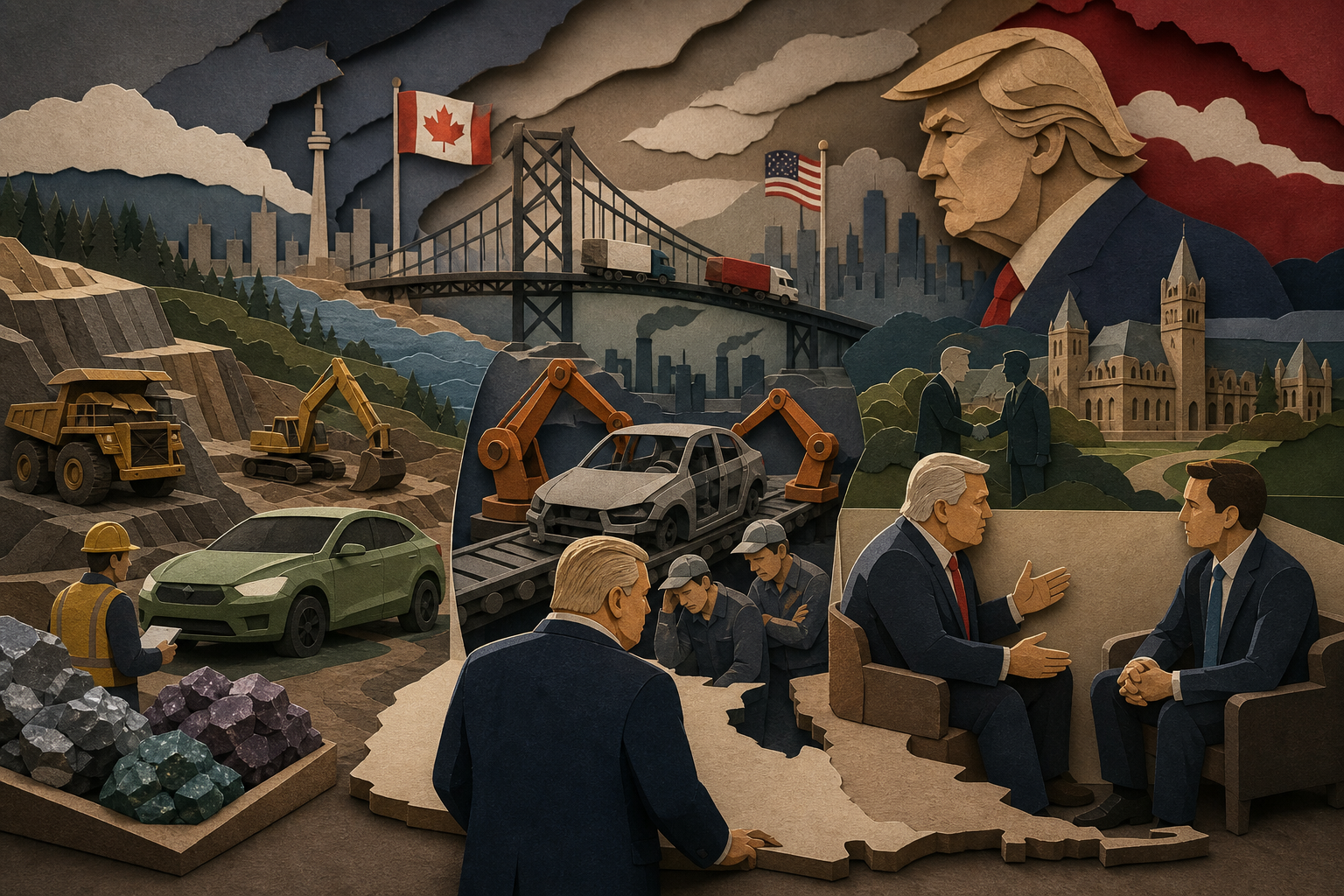

The Ambassador Bridge carries approximately $390 million CAD in two-way trade every single day. When Trump imposed 50% tariffs on Canadian exports in August 2026, Ontario didn't blink, it threw C$15.6 billion in retaliatory tariffs back across the border and Premier Doug Ford started calling U.S. governors directly. That's the posture. The problem is what comes next.
Ontario has three moves left, and picking any of them means accepting damage the province has spent three decades avoiding.
The Critical Minerals Hostage Play
Ontario controls lithium, nickel, and cobalt deposits the U.S. needs to build electric vehicles without relying on Chinese supply chains. The Trump administration wants those minerals onshore, and Ontario can slow-walk permits, tighten export licensing, or simply let projects sit in review purgatory until Washington reconsiders the tariff schedule. It's real leverage. Michigan assembly lines go dark without Ontario steel, but they also go dark without Ontario battery inputs.
The trade-off is brutal. Slowing those projects means killing investment Ontario has been courting for five years. Mining companies don't wait. If permitting becomes a political tool, capital moves to Australia, Chile, or Quebec. The province would win a negotiating round and lose a decade of industrial policy.
Buy Ontario, Lose the Great Lakes Bloc
Ontario spends tens of billions annually on roads, bridges, transit projects, and hospital builds. Right now, U.S. firms can bid. The retaliation option is straightforward: pass provincial Buy Ontario rules that mirror Buy American provisions and lock out U.S. contractors from roads, bridges, transit projects, and hospital builds. It's legally clean, politically popular, and economically stupid.
The Great Lakes region, if you count Ontario, Michigan, Ohio, Pennsylvania, Wisconsin, and the rest, would be the third-largest economy in the world. That integration is Ontario's actual structural advantage. U.S. border states lobby against tariffs because they need Ontario's open procurement as much as Ontario needs their markets. A Buy Ontario law fractures that alliance. Michigan governors stop returning Ford's calls when their construction firms are shut out. A Buy Ontario law means the province pays 18% more for roads, bridges, transit, and hospitals while the tariff fight continues.
Go Over Ottawa's Head and Cut a Side Deal
Premier Ford already meets with U.S. governors outside federal channels. The next step is negotiating subnational terms, Ontario agrees to loosen a regulation, accelerate a pipeline approval, or carve out a sector in exchange for tariff relief on specific goods. It's not a treaty, so it doesn't violate federal jurisdiction. It's just two trading partners solving a problem.
Except Ottawa still controls trade policy under the Constitution. A side deal that contradicts federal strategy gets challenged in court, and even if it survives, it sets a precedent that turns Canada into ten separate negotiating units. Quebec cuts its own arrangement. Alberta does the same. The federal "Team Canada" approach collapses, and the U.S. plays provinces against each other to extract concessions nobody would accept at a national table. Ford might solve Ontario's immediate problem, but he'd permanently weaken the only institutional structure that gives any province leverage against a country ten times its size.
The Arithmetic That Doesn't Move
Approximately 77 to 81 percent of Ontario's exports go to the U.S. Canada accounts for approximately 17% of total U.S. trade. The asymmetry means Washington can endure pain longer than Queen's Park can. Ontario is the primary customer for 19 U.S. states, but that fact only matters if those states have enough political weight to override a president who campaigned on tariffs. In 2026, they don't.
The CUSMA review hits in 2026. Ontario can deploy critical minerals, procurement threats, or subnational diplomacy. All three work as short-term tactics. None of them fix the math.
Sources
Read Next
Wells Fargo Says Rising Bond Yields Should Force You to Rethink Your Stock Portfolio
At the Top Tax Bracket, Every Dollar of Rental Interest Returns 53 Cents: Why the Smith Manoeuvre™ Is a High-Income Play
China's Treasury retreat to record lows rewrites the rules for bond investors
GIC Rates Below 4.2% Flip the Smith Manoeuvre™ Math From Marginal to Compelling