Turn your mortgage into a wealth-building tool. Smith Manoeuvre strategies, tax-smart planning, and honest math from two Canadian mortgage strategists.
Macklem is trying to calm investors while bond yields climb and debt hits record highs
Bank of Canada Governor Tiff Macklem stood before reporters last week and delivered the kind of steady reassurance central bankers specialize in. Markets barely moved. They've heard this speech before, and the numbers keep climbing anyway.
Canada's 10-year bond yield sits at roughly 3.67% as of August 30th, 2026, up from the low-3% range investors had grown comfortable with earlier in the year. At the same time, federal debt has pushed past levels that used to trigger loud warnings from bond vigilantes. The combination is uncomfortable. Bond yields measure what investors demand to lend money to governments. When those yields climb while debt piles up, the message is simple: lenders are getting nervous.
Macklem's remarks focused on the structural strength of the economy and the government's capacity to service its obligations. Both claims are technically accurate. Canada's household debt-to-income ratio is 179.6% as of June 2026, according to Statistics Canada, but that's a household problem, not a sovereign one. The federal government can still borrow at rates most corporations would envy. What matters is the direction yields are moving, not where they sit today.
Why the reassurance isn't landing
The gap between what Macklem is saying and what markets are pricing tells you which one to trust. Central bankers speak to expectations. Bond traders price in actual risk. When the two diverge, the traders have historically been right more often.
Rising yields during a period of record borrowing creates a feedback loop most policymakers would rather not discuss in public. Higher yields mean higher interest costs on new debt. Higher interest costs mean more borrowing to cover the gap. More borrowing pushes yields higher still. The loop doesn't run forever, but it runs long enough to do damage if it isn't interrupted early.
Federal small business tax rates are holding at 9% as of 2026, and marginal rates for households under $60,000 remain in the mid-to-high twenties, per TaxTips.ca. That tax base is stable for now, but it's not expanding fast enough to absorb both rising debt service costs and the structural spending commitments already on the books. Something has to give.
What calm looks like when it fails
Macklem's tone was measured. His language was careful. He avoided any phrasing that could be read as panic or reversal. That discipline is part of the job. But measured language during a sharp move in yields carries a different meaning than measured language during stability. In the first case, it's containment. In the second, it's confidence.
Foreign investors snapped up $100.6 billion in Canadian debt securities as of April 2026, according to Investment Executive. That figure suggests appetite is still there, but appetite is forward-looking. It bakes in assumptions about fiscal discipline, economic growth, and inflation stability. If any of those assumptions shift, the appetite shifts with them, and it shifts faster than reassurances can catch up.
The real test isn't whether Macklem can calm investors this week. It's whether the fundamentals behind the climb in yields, persistent deficits, structural spending locked in by legislation, and an interest rate environment that is no longer historically low, improve enough to make the calm justified. If they don't, reassurance becomes noise.
Markets will watch the next bond auction more closely than the next speech. Yields at that auction will either validate Macklem's message or price in the gap between what he's saying and what the numbers show. That's the vote that counts.


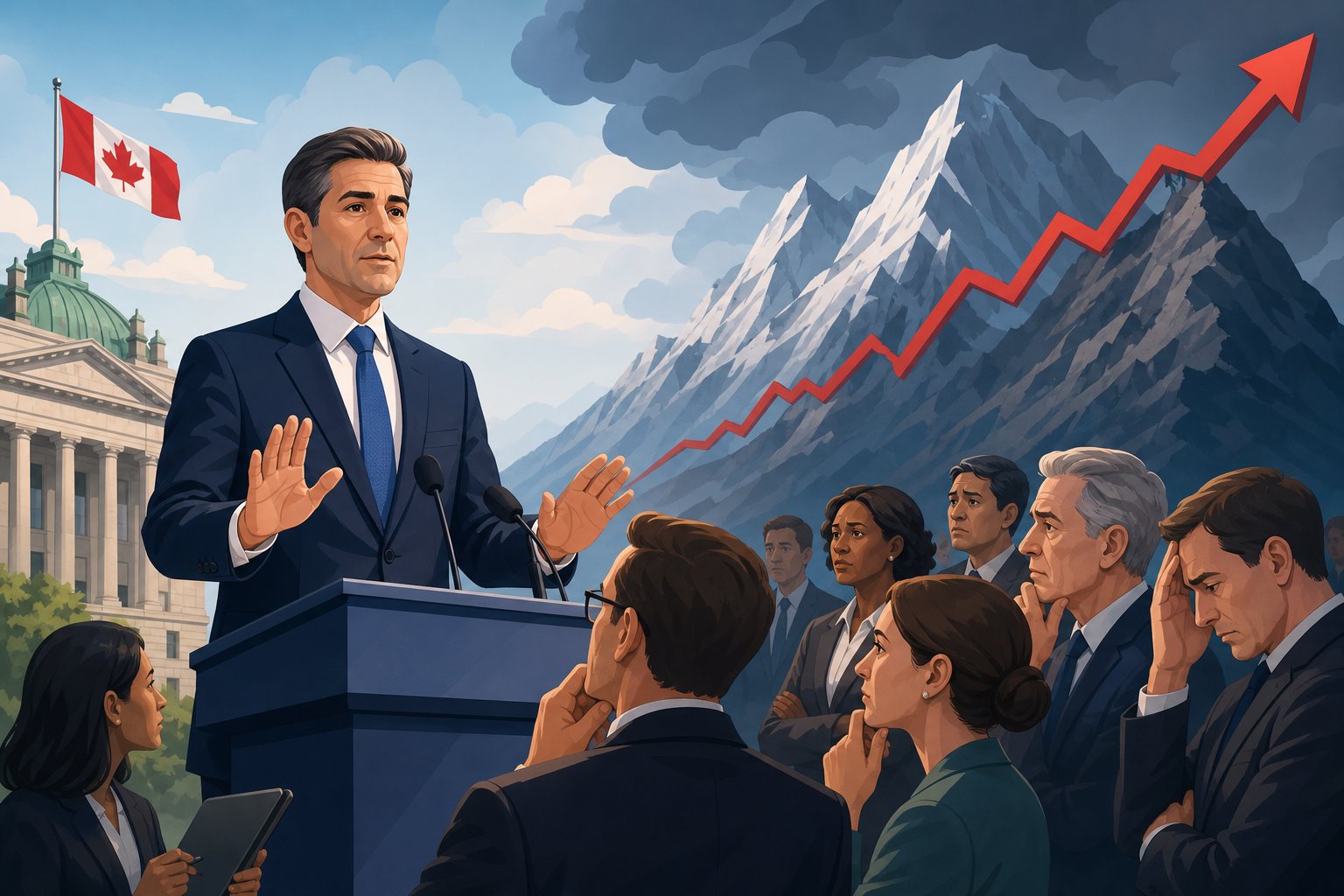

Bank of Canada Governor Tiff Macklem stood before reporters last week and delivered the kind of steady reassurance central bankers specialize in. Markets barely moved. They've heard this speech before, and the numbers keep climbing anyway.
Canada's 10-year bond yield sits at roughly 3.67% as of August 30th, 2026, up from the low-3% range investors had grown comfortable with earlier in the year. At the same time, federal debt has pushed past levels that used to trigger loud warnings from bond vigilantes. The combination is uncomfortable. Bond yields measure what investors demand to lend money to governments. When those yields climb while debt piles up, the message is simple: lenders are getting nervous.
Macklem's remarks focused on the structural strength of the economy and the government's capacity to service its obligations. Both claims are technically accurate. Canada's household debt-to-income ratio is 179.6% as of June 2026, according to Statistics Canada, but that's a household problem, not a sovereign one. The federal government can still borrow at rates most corporations would envy. What matters is the direction yields are moving, not where they sit today.
Why the reassurance isn't landing
The gap between what Macklem is saying and what markets are pricing tells you which one to trust. Central bankers speak to expectations. Bond traders price in actual risk. When the two diverge, the traders have historically been right more often.
Rising yields during a period of record borrowing creates a feedback loop most policymakers would rather not discuss in public. Higher yields mean higher interest costs on new debt. Higher interest costs mean more borrowing to cover the gap. More borrowing pushes yields higher still. The loop doesn't run forever, but it runs long enough to do damage if it isn't interrupted early.
Federal small business tax rates are holding at 9% as of 2026, and marginal rates for households under $60,000 remain in the mid-to-high twenties, per TaxTips.ca. That tax base is stable for now, but it's not expanding fast enough to absorb both rising debt service costs and the structural spending commitments already on the books. Something has to give.
What calm looks like when it fails
Macklem's tone was measured. His language was careful. He avoided any phrasing that could be read as panic or reversal. That discipline is part of the job. But measured language during a sharp move in yields carries a different meaning than measured language during stability. In the first case, it's containment. In the second, it's confidence.
Foreign investors snapped up $100.6 billion in Canadian debt securities as of April 2026, according to Investment Executive. That figure suggests appetite is still there, but appetite is forward-looking. It bakes in assumptions about fiscal discipline, economic growth, and inflation stability. If any of those assumptions shift, the appetite shifts with them, and it shifts faster than reassurances can catch up.
The real test isn't whether Macklem can calm investors this week. It's whether the fundamentals behind the climb in yields, persistent deficits, structural spending locked in by legislation, and an interest rate environment that is no longer historically low, improve enough to make the calm justified. If they don't, reassurance becomes noise.
Markets will watch the next bond auction more closely than the next speech. Yields at that auction will either validate Macklem's message or price in the gap between what he's saying and what the numbers show. That's the vote that counts.
Sources
Read Next
Wells Fargo Says Rising Bond Yields Should Force You to Rethink Your Stock Portfolio
At the Top Tax Bracket, Every Dollar of Rental Interest Returns 53 Cents: Why the Smith Manoeuvre™ Is a High-Income Play
China's Treasury retreat to record lows rewrites the rules for bond investors
GIC Rates Below 4.2% Flip the Smith Manoeuvre™ Math From Marginal to Compelling